Tile Roof Replacement in Chevy Chase Canyon from $8,000. On most Glendale tile roofs the tile is fine. It is the felt underneath that has failed. Free inspection and a written quote.
Custom houses come with custom tile. Profiles up here are often one-off or discontinued, which makes the salvage count more important than anywhere else in the city: if breakage runs high and there is no match available, a partial replacement stops being an option halfway through the job. We count first.
Clay barrel tile is the signature covering of this city's period housing, and it outlives the underlayment beneath it by decades. A tile field that looks perfect from the street can be sitting on felt that has gone brittle and torn, which is why these roofs leak with no broken tile anywhere near the stain.


Full tile replacement in Los Angeles runs $15 to $25 per square foot, so $30,000 to $60,000 is a normal figure for one. A lift and relay -- your own tile back down over new underlayment -- is $8,000 to $22,000. In a city built on clay barrel tile that one answer is worth more than every other decision on this page combined. There is no meaningful per-square-foot rate up here. Custom roof geometry, single-lane access and nowhere obvious for a dumpster mean the quote has to be built from the property rather than from a rate card. Anyone who gives you a number over the phone is guessing.
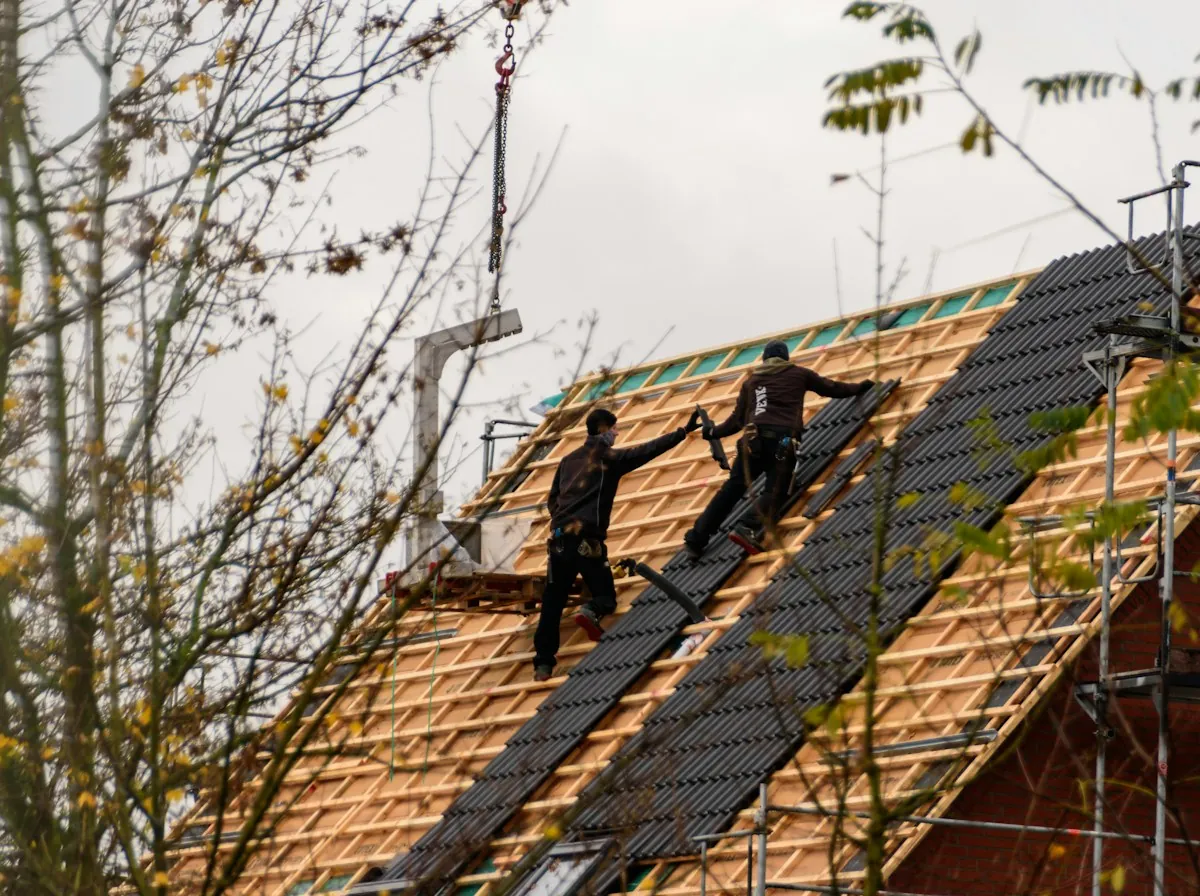
If the tile is sound and only the felt beneath has failed, the relay is the right job at roughly half the cost. We count the salvageable tile before quoting either.
Spalling or widely broken tile, an obsolete profile with no match available, a steep or canyon lot where every piece is handled twice, or framing that needs attention.
A full replacement quoted without anyone having counted your tile. On a 1920s roof that is a price for the wrong job -- and on a designated property it may not even be approvable.
Canyon streets change the job rather than the roof. Access is single-lane and often has nowhere to put a dumpster, material has to be staged in stages rather than dropped in one load, and a roof that faces down a canyon takes wind very differently from the same roof on the flat. Custom houses also mean custom roof geometry, so there is no standard square-foot rate that means anything here.
Chevy Chase Canyon is winding canyon roads and custom-built hillside houses, so both the access plan and the roof geometry are specific to the property.
Worth knowing before you start ringing round, and worth factoring into anything with a deadline on it.
Roofs here fail quietly through a dry summer -- ultraviolet light and heat working on the covering, felt going brittle under the tile, laps loosening -- then a wind event off the Verdugos lifts whatever was already loose, and the first serious rain finds all of it at once. Every roofer in the foothills takes those calls on the same three nights.
There is no standard square-foot rate that means anything up here.
Most of Chevy Chase Canyon is not designated, and plenty of it is too new to be.
Custom roof geometry means the junctions are the job.
Custom canyon houses include genuinely modern flat sections -- cantilevered decks, flat-roofed wings stepping down the slope -- and those are a different job from a tacked-on addition.
Custom houses tend to have genuinely independent roof sections -- different planes, different pitches, sometimes different coverings put on at different times.
Barrel tile, period streets, and design review.
Up against the Verdugos. Fire zone and a shopping street.
Designated historic. Review before permit, every time.
Under 200 homes, heavy canopy, a stream through it.
Steep lots, split levels, three decades of styles.
A 1920s-30s grid that still looks like one.
Brush interface and canyon wind, all year.
The questions that decide this job, answered up front.
Because the leak is under it. Clay and concrete tile outlast the felt beneath them by decades, so the underlayment tears and goes brittle while the tile field above still looks new from the street. That is the commonest tile failure in Glendale and it is not visible from the ground.
Not from a supplier -- that profile has not been made for generations and the color variation across ninety years of weathering cannot be matched from a pallet. What works is salvaging your own: a relay puts the original tile back, and where some has to be replaced the sound pieces go on the street elevation.
It depends on the slope. Glendale is Title 24 climate zone 9, and the steep-slope cool-roof requirement applies in zones 10 to 15 -- so a pitched roof here is generally outside it, and a quote charging you for it is worth a question. Low slope is different: that requirement applies in all sixteen zones with no exemption.
No. The inspection is free, the written quote is free, and there is no obligation attached to either. What we will not do is give you a price at the door without going up, and on a tile roof we will not quote at all until the salvageable tile has been counted.
It is a real rule and it is not California's. Several states apply a 25% threshold, above which a repaired roof has to be brought up to current code. California uses 50%: replace more than half the total roof area within any one-year period and the whole roof has to comply. If you have read about the 25% rule, that is why it does not match what a Glendale contractor tells you.
A free inspection, and a written quote against a written scope. Every slope photographed before and after - the set is yours.